From Trash Can to Somewhere Else: The Full Journey of a Disposable Product
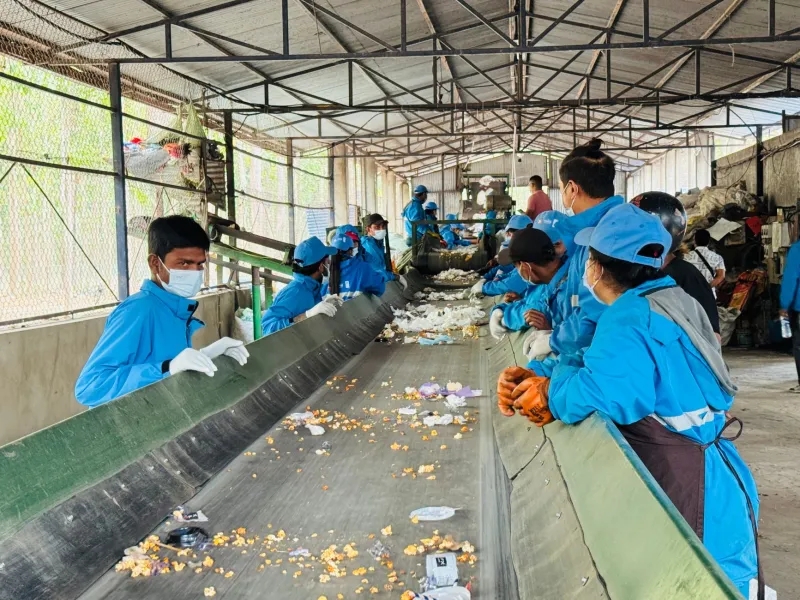
There's a reason single-use products are so popular — they're fast, hygienic, and genuinely practical for a huge range of situations. But once that disposable cup hits the trash bag, most of us stop thinking about it. Out of sight, out of mind, right?
Not quite. The lifecycle of a disposable product doesn't end at your curbside bin. It continues through a surprisingly complex chain of facilities, decisions, and environmental consequences. And understanding that chain doesn't mean you need to feel guilty about ordering supplies — it means you can make smarter, more informed choices about what you buy and how you handle it.
Let's follow a few common disposable items and see where they actually end up.
The Three Paths Most Disposables Travel
When a single-use item gets tossed, it generally lands in one of three places: a landfill, a recycling facility, or an incinerator. A much smaller fraction — especially in commercial settings — ends up in composting programs.
Landfills are the default destination for the majority of disposable products in the US. The EPA estimates that Americans generated about 292 million tons of municipal solid waste in a recent year, and a significant chunk of that includes disposable packaging, serviceware, and supplies. In a landfill, materials break down at wildly different rates depending on what they're made of. A paper napkin might decompose in weeks. A plastic fork? Potentially hundreds of years, slowly fragmenting into microplastics rather than truly disappearing.
Recycling facilities are the more optimistic option, but the reality is messier than the blue bin suggests. Contamination is a huge issue — a recyclable plastic container coated in food residue often gets rejected and rerouted to landfill anyway. Additionally, not all materials labeled as recyclable are actually processed in every US market. What's accepted in Portland, Oregon might not be accepted in Tulsa, Oklahoma. Local infrastructure varies enormously.
Incineration (or waste-to-energy processing) is more common in some regions than others. It does reduce volume and can generate electricity, but it also produces emissions that require careful management. It's not a clean solution, but it's also not the environmental villain it's sometimes made out to be — context matters a lot here.
What Actually Happens to Common Disposable Products
Let's get specific, because different product categories have very different outcomes.
Paper products — napkins, paper plates, paper towels — are theoretically compostable, but only under the right conditions. Most of them don't make it to industrial composting facilities. When they end up in landfills, they can generate methane as they decompose anaerobically (without oxygen). That said, paper breaks down far faster than synthetic materials, which is a meaningful distinction.
Foam (polystyrene) products are one of the more challenging categories. Styrofoam cups and containers are lightweight and durable during use, but they're notoriously difficult to recycle. Many municipalities don't accept them at all. They can persist in the environment for a very long time and are a common source of litter-related pollution in waterways.
Plastic gloves and foodservice items vary significantly by material. Nitrile gloves, for example, aren't recyclable in standard programs. Some specialty recyclers exist, but they're not widely accessible. Polyethylene food wrap and bags have dedicated drop-off recycling programs at many US grocery stores, which is actually a practical option many people don't know about.
Compostable disposables — products marketed as biodegradable or compostable — are worth a separate mention. These items are designed to break down, but usually only in industrial composting environments that hit specific temperature and moisture conditions. Tossed into a regular landfill, many compostable products break down slowly and may not perform much better than conventional plastics in that context.
What Businesses Can Actually Do About It
If you're running a business that relies on disposable supplies — a restaurant, a catering company, a healthcare operation, a retail shop — you have more leverage here than an individual consumer does. Volume matters. Choices at scale matter.
Audit your disposal streams. Do you know what percentage of your disposables end up in landfill versus recycling? Even a rough estimate gives you something to work with. Some waste management companies that service commercial accounts can provide reporting.
Match your product choice to your disposal infrastructure. If your city offers commercial composting pickup, it actually makes sense to order compostable serviceware — because those items will reach the right facility. If you don't have that infrastructure, paying a premium for compostable products may not deliver the environmental benefit you're expecting.
Consider consolidating product types. Using fewer SKUs of disposables can simplify sorting and reduce cross-contamination in recycling. It also makes bulk ordering more efficient.
Talk to your waste hauler. Seriously — many businesses have never had this conversation. Waste management companies often have guidance on what they actually process in your specific region, and some offer specialized pickup for categories like plastics or food-soiled paper.
The Honest Bottom Line
Convenience has a cost. That's not a judgment — it's just true, and it's worth knowing. The good news is that being informed doesn't require abandoning disposables altogether. Single-use products serve real, legitimate purposes across industries, and the goal isn't to feel bad about using them.
The goal is to use them thoughtfully. Buy what you need, understand what your local systems can actually handle, and don't assume the recycling bin is a magic solution. When you order through Disposable Shop, you're getting products that serve a real function. What happens next is partly up to you — and now you've got a clearer picture of the options.