Beyond the Break Room: 5 Unexpected Industries That Run on Disposable Supplies
When most people think about disposable products, their minds jump to the obvious stuff — hospital gloves, paper coffee cups, to-go containers. Makes sense. Those industries are practically synonymous with single-use solutions.
But spend any time sourcing supplies at scale, and you start to notice something interesting: disposable products show up in the most unexpected corners of the American economy. We're talking industries where single-use isn't just a convenience — it's the backbone of how work actually gets done.
Here are five sectors that might genuinely surprise you.
1. Film and Television Production
Hollywood runs on more than scripts and star power. Behind the scenes, a working film or TV set is essentially a small city that pops up, operates at full throttle, and then disappears — sometimes within days. That kind of temporary, high-intensity operation creates a massive demand for disposable supplies.
Craft services tables (the legendary snack spreads that keep crews fueled through 14-hour shooting days) rely heavily on disposable plates, cups, napkins, and cutlery. With crews that can number in the hundreds and no permanent kitchen infrastructure on location, there's simply no realistic way to manage reusable dishware.
But food service is just the beginning. The makeup and hair departments go through disposable applicators, sponges, gloves, and sanitation wipes at a remarkable rate — especially on productions with large casts. Costume departments use disposable garment bags and protective covers. Set construction teams rely on disposable drop cloths, painter's tape, and protective sheeting.
For production companies managing tight shoot schedules, disposable supplies aren't just convenient — they're a time-saving necessity. Every minute spent washing dishes or cleaning equipment is a minute the meter is running on an expensive location.
Pro tip for production coordinators: Buying disposable supplies in bulk through a dedicated supplier (rather than running to the nearest big-box store mid-shoot) can shave real dollars off your below-the-line budget.
2. Disaster Relief and Emergency Response Organizations
When a hurricane tears through the Gulf Coast or wildfires displace thousands of families in California, the organizations mobilizing to help them face a logistical challenge most of us never think about: how do you feed, shelter, and provide basic hygiene to thousands of people when there's no running water, no functioning kitchen, and no time to waste?
Disposable supplies are the answer.
Relief organizations like the American Red Cross and FEMA-coordinated response teams depend on single-use products at every level of their operations. Disposable plates, cups, and utensils allow mass feeding operations to serve hot meals without dishwashing infrastructure. Disposable gloves, masks, and protective gear keep volunteers and workers safe in environments that may be contaminated. Single-use hygiene kits — including disposable razors, toothbrushes, and wipes — restore a basic sense of dignity to displaced individuals.
In these settings, the "waste" of disposable products is a non-issue compared to the logistical impossibility of managing reusables in a crisis zone. Speed, sanitation, and scale are everything — and disposable supplies deliver on all three.
3. Tattoo and Body Art Studios
The tattoo industry has exploded in the US over the past two decades, and it's now a multi-billion dollar market. What most clients don't see — focused as they are on the art being created — is the meticulous sanitation protocol happening around them.
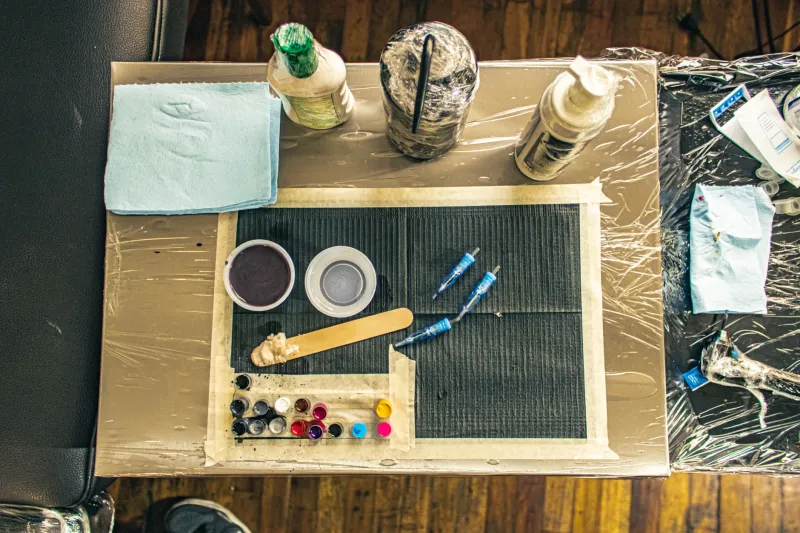
Reputable tattoo studios are heavy users of disposable supplies, and for very good reason: bloodborne pathogen exposure is a genuine occupational and public health risk. Single-use needles are the obvious example, but the list goes much further. Disposable gloves (often changed multiple times during a single session), ink caps, razors, transfer paper, and barrier films that cover equipment between clients are all standard practice.
Many studios also use disposable drape sheets on their work surfaces and disposable covers on spray bottles and other tools that can't be fully sterilized. The Association of Professional Piercers and similar industry bodies actively promote single-use standards as a core safety requirement.
For studio owners, cutting corners on disposables isn't just an ethical issue — it's a liability one. A single infection traced back to reused equipment can end a business.
4. Corporate Event Planning and Conference Management
The corporate events industry — covering everything from Fortune 500 shareholder meetings to regional trade shows to multi-day leadership summits — is one of the largest consumers of disposable supplies you've probably never thought about.
Consider what goes into a two-day corporate conference for 800 attendees: registration materials, name badge holders and lanyards (often single-use by design), disposable serving ware for breakfast and lunch stations, coffee cup sleeves, cocktail napkins for the evening reception, and branded takeaway bags. Multiply that across the thousands of corporate events held every year across the US, and you're looking at an enormous volume of single-use product consumption.
Event planners also rely on disposable supplies for setup and breakdown efficiency. Protective floor coverings, disposable tablecloths, and shrink-wrapped display materials all make large-scale venue transformations faster and more cost-effective than their reusable counterparts.
The shift toward hybrid events post-pandemic has also created new demand — think disposable sanitizing wipe packets at every seat, individual snack packaging instead of shared platters, and single-use headset covers for shared audio equipment.
5. Agricultural and Farming Operations
This one might be the most overlooked of all. American agriculture — from small family farms to large commercial operations — is a surprisingly significant user of disposable supplies.
In produce farming and packing, disposable gloves, hairnets, and aprons are standard PPE for workers handling food destined for grocery shelves. Food safety regulations (particularly those stemming from the FDA's Food Safety Modernization Act) require strict hygiene controls that disposable supplies help enforce at scale.
Beyond food safety, farms use disposable products in ways that reflect their unique operational needs: single-use seedling trays, disposable irrigation fittings, and even disposable protective covers for sensitive equipment during pesticide application. Livestock operations use disposable gloves and sleeves for veterinary procedures and artificial insemination — practices that require sterile, single-use tools for both animal welfare and biosecurity reasons.
For farm managers operating across large acreages with distributed workforces, the practicality of disposable supplies is hard to overstate. There's no central supply closet to return to, no facility manager restocking reusable gear. Single-use products keep operations moving without creating logistical bottlenecks.
The Common Thread
Look across these five industries and a pattern emerges. Disposable supplies aren't just about convenience — they're about enabling operations that wouldn't otherwise be possible. Whether it's a film crew working a remote location, a relief organization responding to a natural disaster, or a tattoo artist protecting their clients, single-use solutions solve real problems that reusable alternatives simply can't address at the required speed, scale, or sanitation level.
At Disposable Shop, we supply businesses across industries exactly like these — because we know that single-use done right isn't wasteful. It's essential. Whatever your operation looks like, we've got the supplies to keep it running.