Cheap Disposables Are Costing You More Than You Think — Here's the Proof
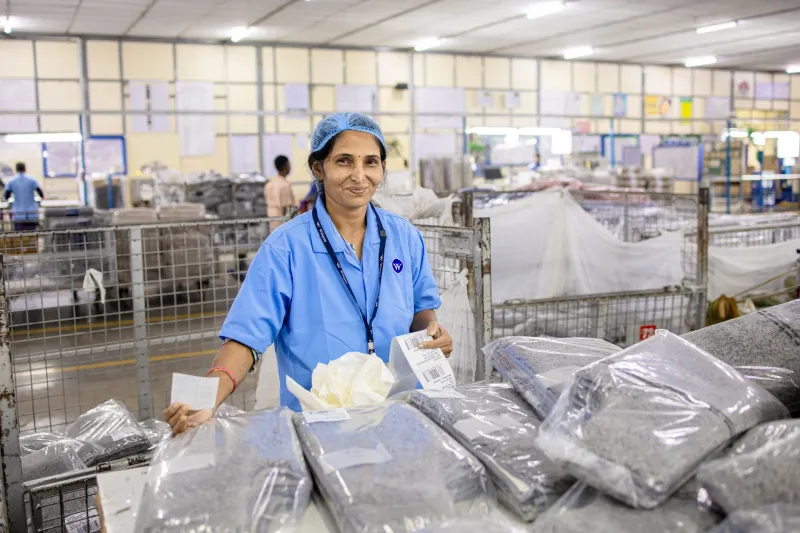
Every purchasing manager has been there. You're staring at two nearly identical line items — same product category, wildly different prices — and the cheaper option is whispering sweet nothings about your Q3 budget. So you pull the trigger. A few weeks later, a pallet of flimsy gloves shows up, your kitchen staff is blowing through three pairs per shift instead of one, and suddenly that "deal" is starting to look a lot more expensive.
This is the disposable dilemma, and it's quietly draining businesses across the country. The math looks obvious on a spreadsheet but gets complicated fast in real-world operations. Understanding why cheap disposable suppliers cost more in the long run isn't just useful — for many businesses, it's the difference between running lean and hemorrhaging cash.
The Illusion of Savings at the Purchase Order Level
Let's be direct about something: suppliers who compete almost exclusively on price are making trade-offs somewhere. Materials get thinner. Manufacturing tolerances loosen. Quality control steps get skipped. The finished product technically fits the product description but underperforms in ways that don't show up until it's already in your facility.
The problem is that most businesses evaluate disposable purchases at the unit cost level. A box of nitrile gloves at $7.50 looks better than one at $11.00 — full stop. But unit cost is only one variable in the real equation. The others include:
- Usage rate — How many units does your team burn through per task?
- Failure rate — How often does a product tear, leak, or malfunction mid-use?
- Rework cost — What happens operationally when a disposable fails at the wrong moment?
- Complaint and return exposure — If you're serving customers, what does a product failure cost you in goodwill and refunds?
- Compliance liability — In regulated industries, what's the fine or shutdown risk if a substandard product fails an inspection?
When you factor all of those in, that $7.50 box can easily cost more than twice the $11.00 alternative.
The Supplier Pricing Game Nobody Talks About
Here's where it gets a little more frustrating. Some low-price suppliers aren't just selling inferior products — they're running a calculated strategy designed to get you hooked on initial savings before the real costs materialize downstream.
The playbook usually goes like this: offer an aggressive introductory price, win the contract, then gradually reduce product specs while keeping the SKU name the same. Gloves get a little thinner. Food service containers lose a fraction of their structural integrity. Packaging gets lighter. Nothing changes dramatically enough to trigger an immediate red flag, but over months the performance degradation adds up.
By the time your team notices the uptick in product failures or your operations manager starts fielding complaints, you've already built the supplier into your procurement workflow. Switching takes effort, and inertia is a powerful force. That's exactly what the supplier is counting on.
Where the Real Damage Shows Up
Depending on your industry, the downstream costs of subpar disposables hit in very different ways — but they hit.
Food service and hospitality: Thin, permeable food service gloves or containers that leak grease aren't just annoying. They're a contamination risk. One food safety incident linked to inadequate PPE or packaging can trigger health department scrutiny, negative reviews, and liability exposure that dwarfs any savings made at the supply level.
Healthcare and clinical settings: This one almost goes without saying, but low-grade exam gloves or procedural supplies in a medical environment aren't a budget decision — they're a patient safety and compliance issue. FDA-regulated disposables have specifications for a reason, and sourcing outside those standards can jeopardize accreditation, invite audits, and expose facilities to serious legal risk.
Retail and e-commerce fulfillment: Cheap poly mailers that split at the seams or tissue paper that tears during packing aren't just wasteful — they create customer service headaches and return shipping costs. When a customer receives a damaged order because your packaging gave out, the cost of that negative experience rarely shows up in the original procurement report.
Manufacturing and industrial: Disposable protective equipment that doesn't hold up under actual working conditions forces workers to double-glove, replace gear mid-task, or — worst case — work with compromised protection. OSHA compliance aside, the productivity hit from constant gear failure is real.
How to Actually Evaluate Disposable Suppliers
So what does smarter purchasing look like in practice? A few principles that consistently hold up:
Ask for samples before you commit to volume. Any reputable supplier will send samples. Put them through actual use-case testing in your environment. Don't just inspect them — use them the way your team will.
Track real-world usage rates, not just unit cost. If your team is burning through 30% more of a cheap product compared to a mid-tier alternative, the mid-tier option is almost certainly cheaper on a per-task basis.
Look for third-party certifications. For regulated categories like food-contact materials, medical PPE, or industrial safety gear, certifications from bodies like the FDA, ASTM, or NSF are a meaningful signal of baseline quality. Suppliers who can't produce documentation when asked are telling you something.
Evaluate supplier transparency. Can they tell you where the product is manufactured? What materials are used? What their QC process looks like? Vague or evasive answers to these questions are red flags.
Do a total cost calculation, not just a unit cost comparison. It takes a little more work, but building a simple spreadsheet that accounts for failure rate, usage rate, and downstream risk by product category will change how your procurement decisions look entirely.
The Right Price Isn't Always the Lowest Price
None of this means you should be overpaying for disposables. There's absolutely a ceiling on what makes sense to spend on single-use products, and plenty of mid-range options deliver excellent value without pushing into premium territory. The goal isn't to spend more — it's to spend smarter.
The businesses that get this right tend to treat disposable supply quality as an operational variable, not just a procurement line item. They understand that a glove, a container, or a bag isn't just a commodity — it's a functional tool that either supports their operation or quietly undermines it.
When you start looking at your disposable supply chain through that lens, the math changes. The cheapest option stops looking like savings and starts looking like what it often is: a liability waiting to be discovered.
And in most cases, that liability costs a whole lot more than the few dollars you saved per case.