Work Smarter, Not Stockpile: 9 Tactics Businesses Use to Slash Disposable Supply Costs
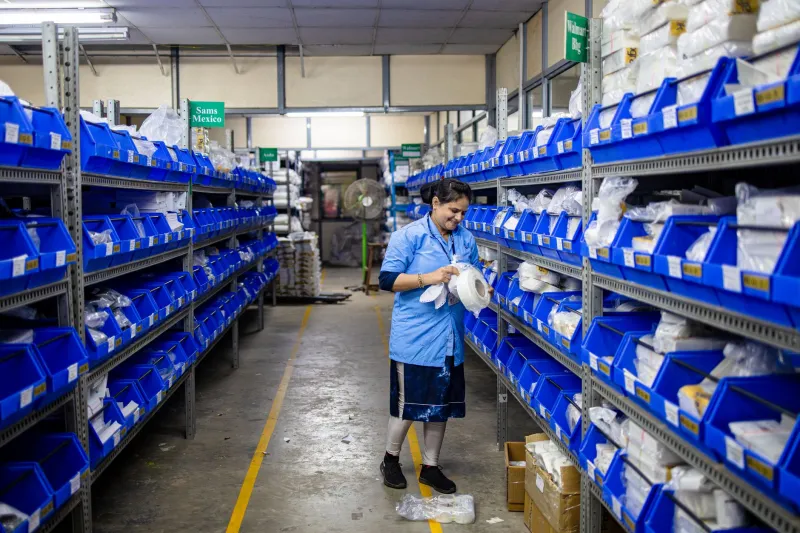
Disposable products are easy to overlook. They're not glamorous. Nobody's writing case studies about napkin procurement. But here's the thing — for food service operations, event venues, healthcare facilities, and retail businesses, single-use supplies can represent a surprisingly large chunk of operating expenses. And because they feel like a fixed cost, most businesses never seriously try to reduce them.
The ones that do? They often find 15 to 30 percent savings without sacrificing quality or convenience. Here's how they do it.
1. Time Your Bulk Orders Around Supplier Cycles
Most distributors and manufacturers run on predictable promotional calendars — end-of-quarter pushes, post-holiday clearances, and annual contract renewal periods when they're motivated to lock in volume commitments. Businesses that pay attention to these cycles and time their larger orders accordingly can capture discounts of 10 to 20 percent that aren't advertised anywhere.
A mid-size catering company in the Southeast figured this out after noticing that their primary supplier ran aggressive promotions every January and July. By shifting their semi-annual bulk purchases to align with those windows, they knocked roughly $8,000 a year off their supply budget without changing a single product.
The practical move: ask your rep directly when their best pricing windows tend to fall. They'll usually tell you.
2. Negotiate Volume Commitments Without Paying for Them Upfront
Here's a negotiation tactic that often gets overlooked: you don't always have to pay for volume to get volume pricing. Many suppliers will offer tiered pricing based on committed annual spend, even if that spend is distributed across monthly orders. You're essentially promising future business in exchange for better rates today.
This works especially well for businesses with predictable usage patterns — think office break rooms, school cafeterias, or hotel housekeeping operations. If you can document your historical usage and project it forward, you have a credible case for a volume commitment that benefits both sides.
3. Audit Your Product Mix for Hidden Redundancies
One of the most common (and most fixable) sources of waste in disposable supply budgets is product redundancy — carrying multiple SKUs that serve essentially the same function. A restaurant might be ordering three different sizes of to-go containers when two would cover 95% of their use cases. A healthcare facility might stock four varieties of disposable gloves when two would do the job.
A quick audit of your current product list, mapped against actual usage data, often surfaces consolidation opportunities that immediately reduce order complexity, lower per-unit costs through better volume concentration, and simplify storage.
One regional chain of urgent care clinics did exactly this and found they were carrying 11 types of disposable exam products when 7 covered all their clinical needs. The consolidation dropped their per-unit average cost by 18%.
4. Borrow Storage Strategies from Warehouse Retail
Big-box warehouse retailers have spent decades optimizing how they store and rotate high-volume, low-cost consumables. Their core principle — FIFO (first in, first out) combined with dedicated, clearly labeled storage zones — sounds obvious but is routinely ignored in back-of-house settings.
When disposable products aren't stored systematically, businesses end up with expired or degraded stock, misplaced inventory that gets reordered unnecessarily, and staff pulling from multiple partial cases when they could be working from a single open one. Implementing basic warehouse-style organization in your storage area can meaningfully reduce waste and cut "phantom" reorders.
5. Use Variance Reports to Catch Usage Creep
Usage creep is real. It happens when the number of disposable products consumed per customer, per procedure, or per event quietly increases over time — not because of any deliberate decision, but because nobody's watching. An extra napkin in every bag. A second pair of gloves pulled out of habit. Slightly larger portion cups than necessary.
Businesses that track disposable product consumption against a benchmark (customers served, rooms cleaned, procedures performed) and flag variances early can address the issue before it compounds. A fast-casual restaurant chain that implemented this kind of monitoring across 40 locations found that their per-transaction napkin consumption had drifted 22% above their baseline over 18 months — a meaningful number at scale.
6. Cross-Shop Between Industry Verticals
Most businesses buy their disposable supplies from industry-specific distributors — food service operators buy from food service suppliers, healthcare facilities from medical supply companies, and so on. But a lot of the underlying products are identical or functionally equivalent across categories, and the pricing can vary dramatically depending on which channel you're buying through.
Nitrile gloves are a good example. The same glove specification might carry a significantly different price tag depending on whether it's sold as a "food handler glove" versus a "general-purpose industrial glove." Savvy buyers check multiple channels and buy based on spec and price, not on which catalog the product happens to appear in.
7. Consolidate Vendors to Unlock Better Terms
Spread your disposable supply spend across five vendors and you're a small account to each of them. Consolidate that same spend with two vendors and you become a meaningful customer worth keeping — which translates into better pricing, priority fulfillment during shortages, and more flexibility on payment terms.
This doesn't mean going single-source on everything (maintaining at least one backup supplier relationship is smart risk management). But strategic consolidation is one of the highest-leverage moves available to businesses that have historically bought from whoever had the best deal on any given order.
8. Pilot New Products Before Committing to Volume
Switching to a lower-cost product that turns out to perform poorly isn't a savings — it's a double expense. You pay for the inferior product and then pay again to replace it. Yet many businesses skip the pilot phase and jump straight to a bulk order of an untested alternative.
The discipline of running small-scale trials — ordering a single case of an alternative product, testing it in real conditions, and collecting feedback from the staff who actually use it — saves a lot of costly mistakes. It also gives you concrete performance data to use in vendor conversations.
9. Set Par Levels and Actually Stick to Them
This one sounds almost too simple, but it's genuinely one of the most impactful things a business can do. A par level is the minimum quantity of a product you want on hand before reordering. Businesses that set and enforce par levels stop the two most common ordering failure modes: running out of product unexpectedly and panic-buying at unfavorable prices, or dramatically over-ordering and tying up cash in slow-moving inventory.
Par levels work best when they're reviewed quarterly and adjusted based on actual consumption trends — not just set once and forgotten.
The Takeaway
None of these tactics require a major operational overhaul or a big technology investment. They're mostly about paying closer attention to a category that most businesses treat as an afterthought. The businesses that do pay attention — that track usage, time their purchases, audit their product mix, and negotiate deliberately — consistently find meaningful savings hiding in plain sight.
At Disposable Shop, we're here to make single-use supply management easier, not just cheaper. But the two often go hand in hand.