Small Case, Big Savings: The Case Against Automatic Bulk Buying
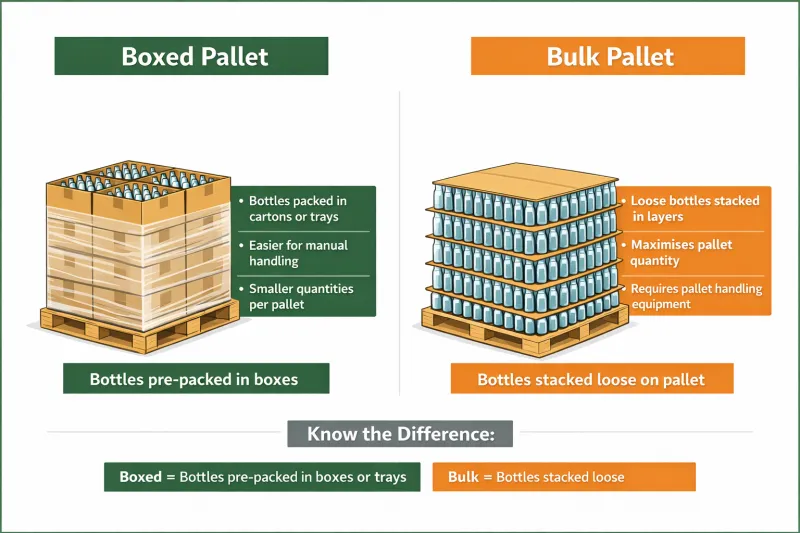
Photo: warehouse bulk cases stacked versus small boxes comparison, via www.waresofknutsford.co.uk
Let's get one thing out of the way: we sell in bulk. We like bulk. Bulk pricing exists for a reason, and for high-turnover items, it's genuinely the cheapest way to buy.
But somewhere along the line, "buy in bulk" became business gospel — a reflex instead of a decision. And reflexive bulk buying can cost you more than it saves.
When the Biggest Case Is the Worst Deal
Here's what the unit price on the label doesn't tell you:
Storage isn't free. Every square foot of shelving, stockroom, or closet dedicated to six months of cup inventory is square foot you can't use for something else. In retail and restaurant spaces, that's rent you're paying to store cardboard.
Product has a shelf life. Gloves degrade, adhesives on packaging fail, wipes dry out, and paper products absorb ambient moisture. A case of anything that expires or degrades before you use it isn't a deal — it's a donation to the dumpster.
Cash flow is a cost. Money tied up in a pallet of napkins is money not available for payroll, marketing, or that equipment repair you've been putting off. For small businesses especially, liquidity has real value.
Demand changes. Remember the great stockpile hangover of 2020-2022? Businesses that ordered a year of supplies based on pre-pandemic demand spent years warehousing stuff they no longer needed. Menus change, headcount changes, regulations change. Big orders are bets on a predictable future — and the future rarely cooperates.
A Simple Framework: The 90-Day Test
Before your next order, run the item through four quick questions:
- Do we use this up in 90 days or less? If yes, bulk is probably safe. If it takes six months to burn through, buy smaller.
- Does it degrade? Anything with adhesive, moisture content, or a shelf life argues for smaller, fresher orders.
- Do we have free storage for it? If bulk cases displace usable workspace or require new shelving, factor that cost into the "savings."
- Is our demand stable? If usage has varied more than 20% in the past year, hedge with smaller orders.
Score two or more "no" answers? Skip the big case.
The Middle Path
Most buyers treat this as either/or — giant pallet or tiny retail pack. But the sweet spot for many businesses is the middle tier: case quantities sized for a quarter of use rather than a year. You'll typically capture most of the bulk discount while keeping your storage lean and your cash flexible.
The Takeaway
Bulk buying is a tool, not a virtue. The smartest purchasers we talk to don't ask "what's the cheapest per unit?" — they ask "what's the cheapest way to keep this item in stock without it costing me anything else?" Sometimes that's a pallet. Often, it's a case. Every once in a while, it's two boxes.
Run the 90-day test before your next order. Your storage room — and your bank account — will both look better for it.