Buried in Boxes: The Disposable Stockpile Hangover That's Still Haunting Businesses Four Years Later
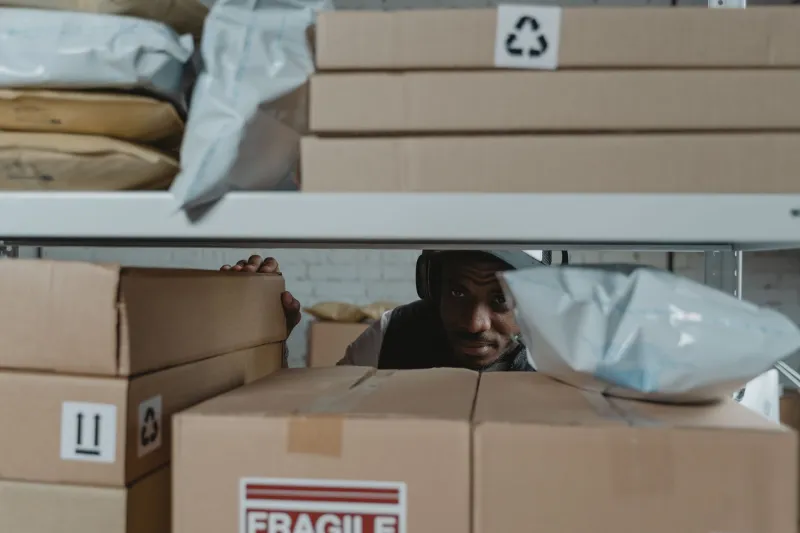
Somewhere right now, in a back storage room or a rented warehouse bay, there are pallets of disposable supplies that nobody wants to talk about. Boxes of N95s that were ordered at 10x normal price in spring 2020. Crates of isolation gowns that arrived eight months after they were needed. Tens of thousands of exam gloves that are quietly approaching the end of their usable life.
The pandemic-era disposable buying frenzy is largely out of the news cycle, but its consequences are still very much present on balance sheets and in storage facilities across the country. Analysts have estimated the total value of excess disposable inventory accumulated during COVID at somewhere in the neighborhood of $2 billion — and a significant chunk of it still hasn't been resolved.
This is a story about what happens when fear drives procurement, and what it actually costs when the fear turns out to be bigger than the reality.
How It Happened
To be fair to the people who made these purchasing decisions: 2020 was genuinely unprecedented. Supply chains were collapsing in real time. Hospitals were rationing PPE. Businesses that needed gloves, masks, and protective gear couldn't get them at any price. The rational response — from a risk management standpoint — was to buy as much as you could, whenever you could get it.
So they did. Healthcare systems ordered six months of PPE when they could barely project six weeks. Restaurant groups bought sanitation supplies at volumes that assumed peak pandemic operations would continue indefinitely. Schools, hotels, event venues, and office buildings all stocked up on products they'd never needed before — and ordered multiples of what they realistically needed because nobody trusted that the supply chain would hold.
For a while, that strategy looked smart. Businesses that had stockpiled were the ones that could stay operational when spot market prices went through the roof.
Then the supply chains stabilized. Demand normalized. And everyone looked around at their storage rooms.
The Real Cost of Excess Inventory
The obvious cost is the cash tied up in product that isn't moving. But the full accounting is worse than that.
Storage space costs money — whether you own it or rent it. A pallet of disposable supplies taking up 40 square feet of warehouse space for 18 months isn't free, even if the product itself was already paid for. Organizations that had to rent overflow storage to accommodate their pandemic stockpiles were paying monthly fees on products that were simultaneously losing value.
Then there's the expiration problem. Most disposable products have a shelf life, and it's not always obvious until you're staring at a box that says "use by" and realizing you're three months past it. Gloves degrade. Masks lose their filtration integrity. Sterile products become non-sterile. Products that were purchased at a premium are now worthless — or worse, a liability if they're used without understanding the degradation risk.
Finally, there's the write-off. At some point, finance has to acknowledge that the inventory on the books isn't worth what it was carried at. That conversation is uncomfortable regardless of company size.
Who's Still Sitting On It
The businesses with the most persistent overstock problems tend to fall into a few categories.
Larger healthcare-adjacent organizations bought the most and had the most bureaucratic friction around disposal decisions. Acknowledging the loss requires approvals, documentation, and sometimes external audits — so the boxes just sit while the decision gets deferred.
School districts and government entities face procurement rules that make liquidation complicated. You can't just sell excess supplies on the open market when they were purchased with public funds. The process for authorized disposal or redistribution can take longer than the shelf life allows.
Small businesses often have the opposite problem: the volume isn't large enough to make formal liquidation worth pursuing, but it's large enough to be a real financial annoyance. A lot of these stockpiles are just quietly being used down over years, or eventually thrown out.
What Liquidation Actually Looks Like
For organizations that have moved to actively resolve their overstock, a few approaches have worked.
B2B liquidation platforms have grown significantly as a channel for excess disposable supplies. The prices you'll recover are below what you paid — sometimes well below — but recovering something is better than writing off everything. Products that are still within their use-by dates and haven't been compromised by storage conditions have the best recovery rates.
Donation is another route, particularly for PPE. Healthcare organizations in lower-income countries, domestic community health centers, and nonprofit organizations have been active recipients of donated disposable supplies. The tax treatment of donations can partially offset the loss, and the optics are better than landfill disposal.
For truly expired or degraded product, the only path is disposal — and doing it responsibly. Some categories of disposables require specific disposal methods, particularly anything that was used in clinical settings or that contains chemical treatments.
The Forecasting Lesson
The pandemic broke every forecasting model in existence, which makes it an unfair test case for normal procurement practice. But it did expose some structural weaknesses that apply even in calmer times.
Over-reliance on worst-case scenario planning without a corresponding commitment to reassessing as conditions change is one. Businesses that locked in massive orders in April 2020 and couldn't adjust them when the supply chain stabilized in late 2020 paid a real price for that rigidity.
The absence of tiered ordering strategies is another. Rather than placing one enormous order for 12 months of supply, a structured approach — smaller initial orders with options to scale up — would have left more flexibility to respond as the situation evolved.
And the lack of cross-functional visibility into inventory levels created situations where one department was ordering supplies that another department had already stockpiled. Centralizing disposable supply visibility isn't glamorous, but it's exactly the kind of operational detail that prevents $50,000 mistakes.
Moving Forward Without Repeating It
The pandemic was an extreme event, but supply disruptions happen regularly at smaller scales. The question isn't whether to maintain any buffer stock — you should — but how much buffer is rational given your actual consumption rate and the realistic risk of supply disruption in your category.
A reasonable rule of thumb: buffer stock should reflect your lead time plus a margin for uncertainty, not your worst-case imagination of how bad things could get. For most disposable categories, that's weeks, not months.
The businesses that came through the pandemic overstock problem in the best shape were the ones that moved quickly to assess, decide, and act — rather than hoping the problem would resolve itself. It rarely does.