When There's Nobody to Wash the Dishes: How Labor Gaps Are Reshaping What Businesses Buy
Somewhere in the back of a diner in suburban Ohio, there's a dishwasher position that's been posted on Indeed for four months. The owner has interviewed three people. One didn't show. One accepted the job and never came back after the first shift. One lasted two weeks.
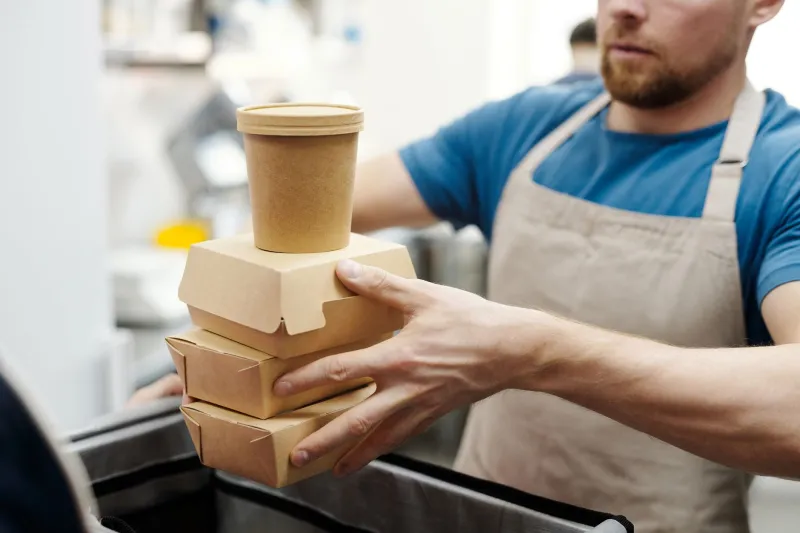
So now the diner runs on disposables.
This isn't a story about one diner. It's a story about thousands of businesses across the country that are quietly rerouting their operational problems through their supply chain — and what that's actually costing them.
The Labor Math That's Driving the Shift
The US labor market has been tight in service industries for several years running, and the ripple effects have been uneven and ongoing. Restaurants, hospitality businesses, healthcare facilities, and food manufacturers have all dealt with staffing shortfalls that range from inconvenient to genuinely threatening to operations.
The instinctive response in many cases has been to simplify. Reduce the number of tasks that require trained staff. Eliminate steps in the workflow that depend on reliable headcount. Find products that do the work a person used to do.
Disposables fit that profile almost perfectly.
A kitchen that can't keep a prep cook doesn't need one if it's buying pre-portioned proteins in individual vacuum-sealed packets. A café that can't staff a full dishwashing station eliminates the problem by switching entirely to single-use serviceware. A catering company that's down two event staff can still execute a buffet for 200 people if everything is individually packaged and requires no plating.
The logic is sound. The execution often works. But the financial picture is more complicated than it looks at first.
What Operators Are Actually Buying
The shift toward labor-substituting disposables shows up clearly in purchasing data across the foodservice and hospitality sectors. The growth categories aren't just cups and napkins — they're more operationally specific.
Pre-portioned condiment packets are up significantly at operations that used to rely on staff to fill ramekins or portion sauces in-house. Individually wrapped cutlery sets — fork, knife, spoon, napkin in one sealed package — have become standard at a wide range of venues that previously set tables or stocked bulk dispensers. Ready-to-use, pre-filled squeeze bottles and single-serve dressings are replacing bulk preparation tasks that required trained kitchen staff.
In healthcare settings, single-use diagnostic supplies and individually wrapped items that used to be sterilized and reused are seeing increased demand as facilities struggle to maintain the staffing levels required for proper sterilization protocols.
The common thread is task elimination. If a product arrives ready to use and gets disposed of after use, it removes an entire workflow loop — prep, cleaning, storage, restocking — that would otherwise require human labor.
The Hidden Costs That Surface Later
Here's where it gets complicated. Using disposables to compensate for labor gaps works operationally, but it introduces a set of financial and operational costs that don't show up in the initial decision.
The most direct one is pure spend. Pre-portioned, individually packaged, ready-to-use disposables cost significantly more per unit than their bulk or reusable equivalents. A pre-portioned salmon fillet in individual packaging costs more than the same fish purchased in bulk and portioned in-house. That margin gap is real, and it accumulates fast at volume.
For some businesses, the math still works — the labor cost savings outweigh the supply cost increase. But that calculation is often made at the executive level without full visibility into what the supply spend actually looks like across all the affected categories. The dishwasher position that went unfilled saved $14 an hour. The switch to full disposable serviceware added $800 a month in supply costs. Whether that's a net win depends entirely on volume, and many operators haven't done the full calculation.
There's also a quality and consistency dimension. Disposable products designed for convenience aren't always designed for performance at the level a trained employee can deliver. Pre-portioned proteins are convenient, but they remove the ability to adjust portion sizes based on demand fluctuations. Individual condiment packets are easy to deploy, but they generate significantly more waste per guest than bulk portioning — and guests notice when they have to tear open six packets to get enough ketchup.
The Training Dependency Trap
One of the quieter consequences of the disposable-as-labor-substitute strategy is what it does to institutional knowledge.
When a business redesigns its operations around single-use, ready-to-use products, it reduces the skill level required for certain roles. That sounds like a benefit in a tight labor market. But it also means the business becomes less capable of operating any other way.
If disposable supply chains tighten — as they have periodically, and as they likely will again — a business that's structured its entire operation around single-use convenience doesn't have a fallback. The staff who knew how to portion, prep, and plate are gone. The equipment that supported those workflows may have been removed. The operational knowledge has atrophied.
This is the long-term version of the labor-substitution risk that most businesses aren't thinking about yet. They're solving a 2024 problem in a way that could create a 2026 problem.
Is This Sustainable?
The honest answer is: it depends on what happens next with labor markets and supply chains.
If labor remains persistently scarce and supply chains for disposables remain relatively stable, the current strategy is defensible for many operators. The economics aren't always perfect, but they're workable.
If labor markets loosen — or if disposable supply costs continue to climb due to material costs, tariffs, or logistics pressures — the calculus shifts quickly. Businesses that have fully restructured around single-use convenience will face a harder adjustment than those that maintained some operational flexibility.
The smarter approach, for businesses that have the bandwidth to think past the immediate staffing crisis, is to treat disposable substitution as a bridge rather than a destination. Use it to stabilize operations now, but keep building toward a staffing and training model that doesn't require a single-use workaround at every friction point.
What to Watch in Your Own Operation
If your business has been leaning on disposables to compensate for staffing gaps, a few questions are worth asking regularly.
What's the actual cost delta between your current disposable spend and what you'd spend with full staffing? Is the difference smaller than you think? Are there specific categories where the labor substitution makes clear financial sense and others where you're overpaying for convenience?
And critically: if your primary disposable supplier had a two-week disruption tomorrow, what would break in your operation — and how fast?
The businesses navigating this best aren't the ones who've gone all-in on disposable convenience. They're the ones who've been deliberate about where it makes sense and where it's creating a dependency they can't afford.