Going Green on Paper, Bleeding Green in Reality: The Real Cost of Eco-Friendly Disposable Switches
There's a version of this story that ends well. A business swaps its conventional disposables for compostable, plant-based, or recycled alternatives. Customers notice. Staff buy in. Costs stay flat. The planet gets a little breathing room.
Then there's the version that actually happens to a lot of businesses.
The eco-friendly switch goes through. Costs jump 30 to 60 percent per unit. Employees use more product because the alternatives feel flimsier or perform differently. Customers don't notice — or worse, they complain. And by the end of the quarter, the business has spent significantly more money while generating roughly the same amount of waste, if not more.
This isn't a knock on sustainable disposables. It's a reality check on how businesses approach the transition — and why good intentions don't automatically translate into good outcomes.
The Cost-Per-Use Problem Nobody's Talking About
Most purchasing decisions around eco-friendly disposables start and end at the unit price comparison. A case of conventional foam cups costs X. A case of compostable PLA cups costs Y. Y is higher. The decision gets made at the executive level, the order goes through, and that's that.
What rarely gets factored in is cost-per-use — and that's where things fall apart.
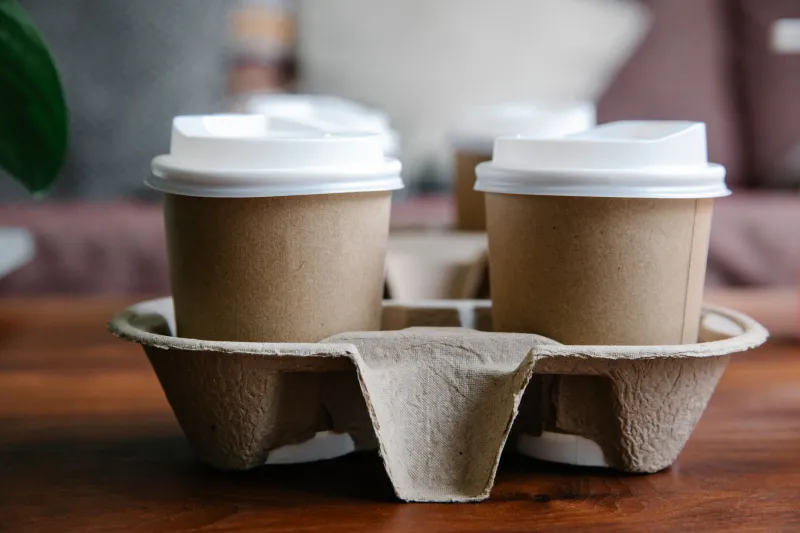
Take a regional coffee chain that made the switch to compostable hot cups a few years back. The cups were certified compostable, looked great, and checked every marketing box. But the lids didn't seal as snugly as the old ones. Baristas started double-cupping more often to compensate for heat transfer issues. Customers occasionally complained about leaks. By the time the chain ran a full operational audit, their actual cost-per-drink had increased by nearly 22 percent — not because the product was bad, but because nobody had modeled how staff would interact with it in a real, fast-paced environment.
This pattern shows up across industries. In food service, a compostable clamshell that requires two units to hold heavier menu items costs twice as much per transaction. In healthcare settings, biodegradable gloves that tear more easily under stress lead to higher consumption rates. The unit economics look fine on paper. The real-world numbers tell a different story.
When Employees Don't Buy In, You Pay for It
Here's something purchasing managers rarely model: employee adoption rates.
When staff are handed a new disposable product — especially one that performs differently from what they're used to — behavior adapts in ways that drive up consumption. Workers grab extras as a buffer. They use more product per task because the new version feels less reliable. They revert to workarounds that weren't necessary with the old supply.
A mid-sized catering company in the Southeast switched its entire disposable serviceware line to a bamboo-based alternative. The products were genuinely solid — sturdy, attractive, legitimately compostable. But they were also slightly larger than the previous plates, which meant they didn't stack as neatly in the existing storage setup. Staff started pulling plates in smaller batches, making more trips, and grabbing extras "just in case" during events. Waste went up. So did reorder frequency.
Nobody trained anyone. Nobody audited usage in the first 60 days. The switch just happened, and the operational friction was absorbed silently — until someone finally looked at the supply spend and noticed a 17 percent increase that couldn't be explained by volume alone.
Training matters. Measurement matters. And if you're not building both into an eco-friendly transition, you're essentially paying a premium to generate the same or more waste.
The Customer Perception Gap
Let's be honest about something: most customers don't notice what kind of disposable you're using.
That's not cynicism — it's data. Multiple consumer behavior studies have found that while customers say they care about sustainability, their in-the-moment purchasing decisions are driven by price, convenience, and quality perception far more than packaging materials. The eco-friendly cup doesn't drive foot traffic. The great coffee in it does.
This matters because a significant portion of the business case for switching to premium sustainable disposables rests on an assumed customer response that often doesn't materialize. If you're paying 40 percent more per unit expecting a loyalty or perception boost that never arrives, you've made a financial decision based on a marketing hypothesis.
That's not to say sustainability initiatives have no brand value — they absolutely can. But the return is usually indirect, slow-building, and dependent on how well you communicate what you're doing. A small sign near the register explaining your compostable packaging does more work than the packaging itself.
What a Smarter Transition Actually Looks Like
None of this means you shouldn't make the switch. It means you should make it carefully.
Before committing to a full product line change, run a pilot. Pick one high-volume SKU — your most-used cup, glove, or container — and substitute the eco-friendly version for 30 to 60 days. Track usage rates, not just purchase volume. Count waste. Ask staff directly what's working and what isn't.
Then do the math on cost-per-use, not cost-per-unit. If a product gets used at 1.4x the rate of the conventional version, your effective cost is 40 percent higher than the sticker price suggests.
Also worth asking: does the sustainable version actually end up being processed sustainably? Compostable products that go into a landfill — which is most of them, because industrial composting infrastructure in the US is still limited — aren't delivering the environmental benefit you're paying for. That's a whole separate conversation, but it's relevant to whether the premium is justified.
The Bottom Line on Going Green
Sustainable disposables are a legitimate category with real products that work well. The issue isn't the products — it's the assumption that switching automatically delivers business benefits without any additional effort or analysis.
The businesses that make eco-friendly transitions work are the ones treating it like any other operational change: with a pilot, a measurement plan, staff training, and honest expectations about customer response. The ones that struggle are the ones that treat it as a purchasing swap rather than a strategic shift.
Going green shouldn't mean going broke. But without the right framework, that's exactly what can happen.