When Your Supplier Goes Dark: Building a Disposable Supply Chain That Survives the Unexpected
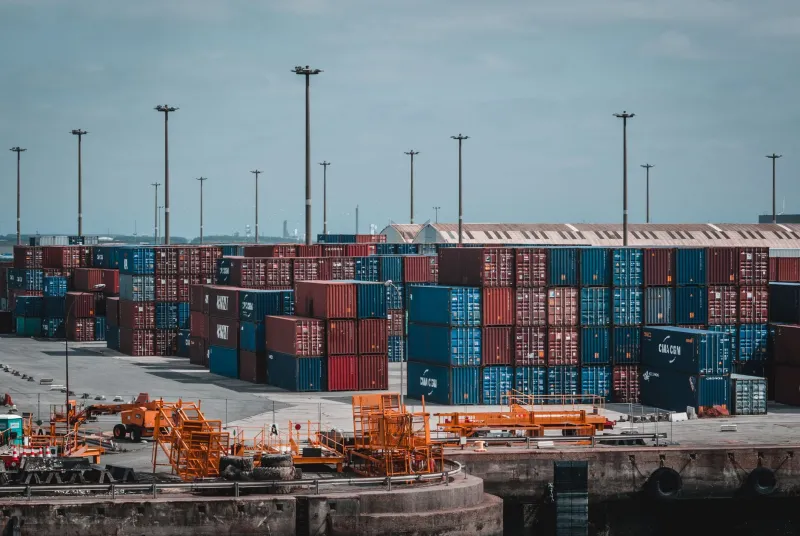
In early 2020, thousands of US businesses discovered something uncomfortable: their entire supply of disposable gloves, masks, and protective gear ran through a handful of overseas manufacturers and a small number of domestic distributors. When demand exploded and those supply lines buckled, there was no Plan B. Shelves emptied. Prices spiked. Businesses that had never thought twice about their PPE supplier suddenly found themselves in bidding wars for basic inventory.
That was an extreme scenario, but the underlying vulnerability it exposed isn't unique to pandemics. Supply chain failures happen at every scale, every year, in every industry. A regional distributor files for bankruptcy. A product recall pulls your go-to item off the market. A factory fire in a foreign country disrupts the entire US supply of a specific SKU. A shipping bottleneck at a West Coast port backs up orders for weeks.
The question isn't whether your primary disposable supplier will ever let you down. It's whether you'll be ready when they do.
The Anatomy of a Supply Chain Failure
Not all supplier failures look the same, and understanding the different types helps you prepare for each one.
Hard failures are sudden and total: a company shuts down, a product gets recalled by the FDA or CPSC, or a natural disaster wipes out a distribution center. These give you little to no warning and require you to pivot fast.
Soft failures are gradual and easy to miss until they become serious: a vendor slowly lengthens lead times, quality begins to slip, communication gets harder, backorders become more frequent. By the time a soft failure becomes obvious, you may have already been operating with a compromised supply chain for months.
Market-wide failures affect multiple suppliers simultaneously — think port congestion, raw material shortages, or a global event that disrupts manufacturing at scale. In these scenarios, simply switching vendors doesn't solve the problem because everyone is dealing with the same constraints.
Each type requires a different response, but they all share a common solution: you have to build resilience before the crisis, not during it.
The Single-Vendor Trap
Consolidating your disposable supply purchases with one vendor has real advantages. You get volume pricing, simpler invoicing, a dedicated account rep, and a streamlined reorder process. It's efficient — right up until it isn't.
Businesses that run everything through a single supplier often don't realize how exposed they are until they try to replace that supplier on short notice. Onboarding a new vendor takes time: you need to verify product specs, confirm compliance certifications, test quality, negotiate pricing, and set up payment terms. Under normal circumstances, that process might take a few weeks. When you're doing it in a crisis because your current supplier just went dark, it can take much longer — and cost significantly more.
The solution isn't to abandon your primary vendor. It's to maintain at least one qualified backup for your most critical SKUs.
Building Your Vendor Bench
Think of supplier diversification the way a sports team thinks about its roster. You have starters — your primary vendors who handle the bulk of your volume. And you have a bench — secondary suppliers who are qualified, vetted, and ready to step up when needed.
For disposables, a practical approach is the 80/20 split: route 80% of your regular volume through your primary vendor to maintain pricing leverage, and place small, periodic orders with a secondary supplier to keep that relationship active and that vendor familiar with your requirements.
This matters more than most buyers realize. A supplier you've never ordered from is not actually a backup — they're a stranger. A supplier you order from quarterly, even in small amounts, knows your specs, has your account on file, and is much more likely to prioritize you when supply gets tight.
What to Look for in a Backup Supplier
Not every vendor is worth adding to your bench. When evaluating secondary suppliers for disposable products, focus on these factors:
- Geographic diversity. If your primary vendor is on the West Coast, a backup in the Midwest or Southeast adds real resilience against regional disruptions.
- Different supply chain origins. If both your primary and backup vendors source from the same overseas manufacturer, a factory disruption affects both of them equally. Look for suppliers who draw from different production regions.
- Compliance documentation. Especially for regulated categories like food service disposables, medical supplies, and chemical-adjacent products, your backup supplier needs to meet the same compliance standards as your primary. Confirm certifications before you need them.
- Responsiveness. A vendor who takes five days to return a quote during normal times is going to be a nightmare during a crisis. Test their communication speed before you commit.
Creating a Supply Chain Continuity Plan
A continuity plan doesn't need to be a 40-page document. For most businesses managing disposable supply chains, a simple one-page reference sheet per product category is enough. It should include:
- Primary vendor contact, account number, and typical lead time
- Secondary vendor contact, account number, and typical lead time
- Minimum acceptable inventory level (your trigger to escalate to the backup)
- Any compliance or specification notes relevant to that product category
Store this somewhere accessible to anyone who might need to act on it. A crisis is the wrong time to discover that the only person who knows the backup vendor's contact information is on vacation.
The Early Warning Signs You Shouldn't Ignore
One of the most valuable things you can do is get better at spotting soft failures before they become hard ones. Watch for these signals:
- Lead times creeping up without explanation
- More frequent backorders or substitutions
- Difficulty reaching your account rep
- Inconsistent product quality or packaging changes
- A vendor that's recently changed ownership or gone through layoffs
Any of these individually might be a blip. Multiple signals at once are a warning. Start qualifying your backup supplier before things get worse.
Resilience Is a Competitive Advantage
Here's the thing most businesses miss: the work you put into supply chain resilience doesn't just protect you from disruption — it gives you an edge over competitors who haven't done the same work. When a market-wide shortage hits and your competitors are scrambling, you're the operation that stays open, fulfills orders, and earns the loyalty of customers who couldn't get what they needed elsewhere.
Building a resilient disposable supply chain isn't about being paranoid. It's about being prepared. And in a market where single-use products are often the operational backbone of entire industries, that preparation pays for itself the moment you need it.